






Mobile Game Development Outsourcing in 2026: Trends, Costs, and How to Choose the Right Partner
The mobile game outsourcing market is no longer a cost-cutting footnote. According to Business Research Insights, the global mobile game development outsourcing market is valued at $2.21 billion in 2026 and is projected to reach $7.23 billion by 2035, growing at a 13.8% CAGR. That trajectory reflects something structural: studios of every size have concluded that building every system in-house is slower, riskier, and more expensive than partnering with teams who already have the infrastructure.
The pressure driving that conclusion is real. Live-service games now require operational support from soft launch onward. Hyper-casual titles need to ship fast and iterate faster. Mid-core games demand multiplayer backends, economy systems, and analytics pipelines that take months to build from scratch. Meanwhile, 68% of studios now outsource development to reduce costs and scale production across art, animation, and testing phases.
But outsourcing done wrong is expensive in a different way. Vague scope, cheap hourly rates that balloon into rework cycles, and partners who treat your product as a ticket queue rather than a shared investment: these are the failure modes that define bad outsourcing.
This guide covers what outsourcing actually looks like in 2026, what it costs, how the collaboration models compare, and what separates partners worth hiring from vendors worth avoiding. For broader context on how outsourcing fits into overall production strategy, see our guide on game development outsourcing and how businesses scale faster.
Key insight: The cheapest hourly rate is rarely the cheapest project. Total cost is shaped by systems complexity, team composition, LiveOps scope, and how much rework your partner's process generates.
The Trends Reshaping Mobile Game Outsourcing in 2026

Mobile game development outsourcing in 2026 looks different from what it was five years ago. The shift is not just in volume but in how studios think about external partners and what they expect from them.
Co-Development Has Replaced Traditional Vendor Relationships
The old model: hand off a task, review the output, repeat. The new model: external teams embedded in your production pipeline, sharing sprint goals, attending design reviews, and owning outcomes rather than just deliverables. Studios increasingly treat outsourcing partners as extensions of their core team, not external contractors. This shift toward co-development is the single biggest structural change in how mobile games get built today.
LiveOps Outsourcing Is Now a Core Function
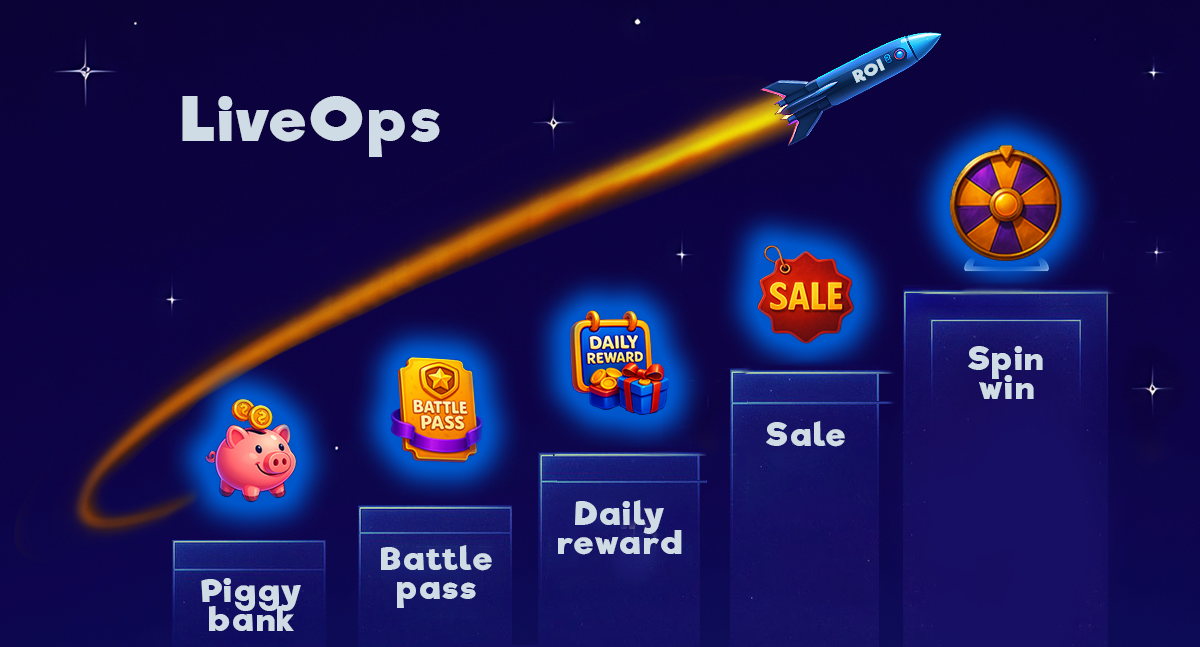
Post-launch support has become one of the most commonly outsourced functions in mobile gaming. Seasonal events, balance updates, monetization tuning, and community-driven content cycles require dedicated capacity that most studios cannot sustain entirely in-house. According to 360iResearch, live-ops support is now a primary growth driver for outsourcing service providers, with demand accelerating alongside the dominance of free-to-play titles, which account for 71% of the market.
AI-Assisted Pipelines Are Compressing Timelines
AI tools are now embedded in art production, QA automation, and level design workflows at serious studios. The practical effect is faster iteration cycles and lower per-asset costs, particularly in 2D art and UI. This does not eliminate the need for skilled specialists; it shifts where their time goes.
Four trends defining the 2026 outsourcing landscape:
- Co-development partnerships over task-based vendor relationships
- Game LiveOps outsourcing as a standing function, not a post-launch afterthought
- AI-assisted pipelines compressing art, QA, and design timelines
- Cloud-based distributed workflows enabling real-time global collaboration across time zones
What Outsourcing Actually Costs: Rates, Complexity, and the Hidden Multipliers
Hourly rates are the number studios fixate on and the number that matters least. The real cost of a mobile game outsourcing engagement is determined by scope complexity, the systems your game requires, team composition, and how much rework your production process generates. For a full breakdown of development budgets, read our guide on how much it costs to develop a mobile game in 2026.
Hourly Rates by Region and Role
Regional pricing has stabilized in 2026, though the gap between Western and Eastern markets remains wide. According to industry cost analysis, Southeast Asian development costs run approximately 70% lower than North American equivalents, per World Bank data. Here is the current benchmark:
| Role | Asia | Eastern Europe | Western Markets |
|---|---|---|---|
| Developer | $25–$50/hr | $50–$100/hr | $100–$200+/hr |
| Artist | $20–$45/hr | $40–$80/hr | $80–$150+/hr |
| QA Specialist | $15–$30/hr | $30–$55/hr | $60–$100/hr |
A dedicated developer running a full month of work typically costs $6,000–$12,000 depending on region and seniority.
Total Cost by Game Complexity
Hourly rates only tell you the price of time. The actual project cost depends on what you are building:
| Game Type | Systems Required | Estimated Total Cost |
|---|---|---|
| Hyper-casual | Core loop, basic analytics | $20K–$80K |
| Mid-core mobile | Progression, economy, analytics | $80K–$250K+ |
| Multiplayer / live-service | Backend, LiveOps, admin tools | $300K–$2M+ |
The Hidden Multipliers Most Studios Underestimate
This is where projects go over budget. Core systems like multiplayer infrastructure, in-game economy, LiveOps event tooling, and backend analytics are not line items — they are entire development tracks. Built from scratch, these systems can represent 50% or more of total development effort. The studios that control costs most effectively maintain clear scope and budget a 15–20% contingency for post-launch maintenance. The industry data consistently shows is necessary regardless of how well the initial build goes.
Learn how building scalable game pipelines through modular design reduces these multipliers significantly.
The real cost equation: hourly rate × hours × rework multiplier. Reduce the rework multiplier and the total drops significantly, even at higher hourly rates.
Collaboration Models: Which Structure Fits Your Project?
How you structure the engagement shapes cost, flexibility, and product outcome as much as who you hire. In 2026, three models dominate mobile game outsourcing, and each carries a distinct risk profile.
The Three Models Compared
| Model | Best For | Cost Profile | Key Risk |
|---|---|---|---|
| Project-based (fixed scope) | Prototypes, small features, clearly scoped work | Lower upfront, higher long-term due to rework | Inflexible; scope changes are expensive |
| Dedicated team | Long-term development, scaling production capacity | Predictable monthly cost; grows linearly with team size | Requires strong internal management |
| Co-development partnership | Mid to large-scale games, live-service products | Balanced; higher efficiency offsets higher rate | Requires cultural alignment and shared ownership mindset |
Why Co-Development Is the Modern Standard for Live-Service Games
Fixed-scope contracts made sense when games shipped once and stayed shipped. Live-service mobile games do not work that way. Roadmaps change after soft launch. Monetization systems get redesigned based on early retention data. New content cycles need to be planned and executed continuously.
A fixed-scope vendor cannot absorb that reality without expensive change orders. A dedicated team can absorb it but only if your internal management is strong enough to direct them effectively. A co-development partner is designed for it: shared sprint planning, shared accountability for product metrics, and a team that has context on why decisions are being made, not just what to build next.
The Modular Approach: Where Cost Efficiency Changes Dramatically
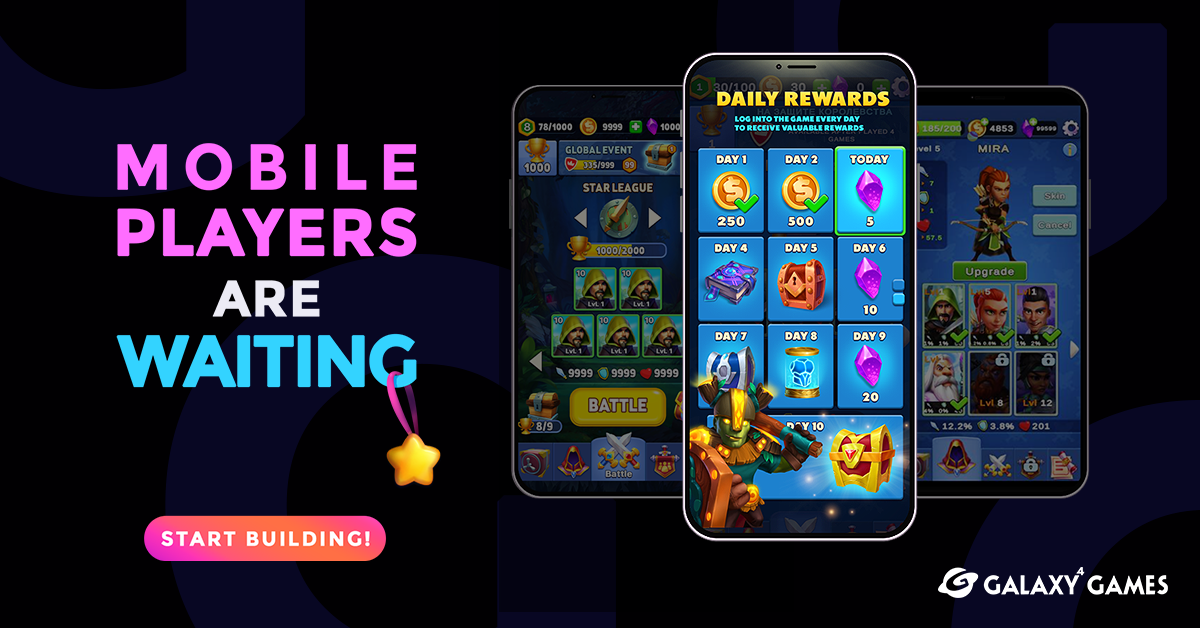
There is a fourth model worth understanding separately. Rather than paying to design, build, test, and inevitably rebuild core systems from scratch, studios working with partners who bring pre-built, battle-tested modules pay only for integration, customization, and scaling.
The cost difference is significant. Building a LiveOps event system or an in-game economy from scratch can take months of engineering time. Integrating a proven, already-launched version of the same system takes a fraction of that. The quality ceiling is also higher because the system has already been stress-tested in production.
The part most outsourcing guides miss: the collaboration model you choose determines how much of your budget goes toward building versus rebuilding. For live-service games, that distinction defines whether you hit your launch window.
Asia vs. Europe: Choosing the Right Outsourcing Region
Region selection is a cost and risk trade-off, not a quality judgment. Both Asia-Pacific and Eastern Europe produce excellent mobile game work. The question is which trade-offs fit your project structure.
Asia-Pacific currently holds 59% of the global outsourcing market share, led by India, Vietnam, and the Philippines. Eastern Europe holds roughly 30% of the market and commands higher rates for engineering and art work.
| Factor | Asia (India, Vietnam, Philippines) | Eastern Europe (Poland, Ukraine, Estonia) |
|---|---|---|
| Hourly rates | $25–$50/hr | $50–$100/hr |
| Talent pool size | Very large | Moderate but highly specialized |
| Communication | Requires strong PM structure | Strong; high cultural alignment with Western studios |
| Time zone overlap | Minimal with US/EU (async-heavy) | Significant overlap with EU; workable with US |
| Best for | Art production, QA, high-volume tasks | Full-cycle development, co-development, LiveOps |
The 40% of developers who cite communication gaps and quality inconsistency as their primary outsourcing challenges are not evenly distributed across regions. These problems are more common in large, loosely managed offshore engagements where timezone gaps compound coordination overhead.
The fix is not always "choose a closer region." It is choosing a partner with documented workflows, transparent reporting, and a track record of shipped products, regardless of where they are based.
How to Evaluate a Mobile Game Outsourcing Partner
Choosing the wrong partner is the most expensive mistake in mobile game outsourcing. These are the criteria that actually differentiate serious partners from studios that look good in a pitch deck.
- Shipped products, not just portfolios. A portfolio shows art direction. A shipped product on the App Store or Google Play proves the partner understands submission requirements, performance optimization, live deployment, and post-launch support.
- Genre and systems expertise. Multiplayer infrastructure, in-game economies, and LiveOps tooling are specialized. A partner who has built and launched these systems before will move faster and make fewer expensive mistakes.
- Workflow transparency. How do they report progress? What does a sprint review look like? Can you see the backlog? Partners who resist transparency are signaling something.
- Scalability and post-launch capability. Evaluate whether the partner can support ongoing LiveOps, analytics, and content cycles after launch.
- Modular and backend infrastructure. The best partners bring pre-built, production-proven systems for analytics, admin control, and LiveOps tooling.
The Galaxy4Games Differentiator

Galaxy4Games has been building and launching its own products alongside client projects for over 15 years. That dual track matters: a studio that ships its own games understands market dynamics, retention mechanics, and monetization realities in ways that pure-service vendors do not. Their modular solutions and LiveOps framework are drawn from systems actively running in live products — covering core gameplay loops, backend analytics, admin control, and event infrastructure.
In 2026, the best outsourcing partners are not the ones who execute your instructions. They are the ones who have already solved the problems you are about to encounter.
Outsourcing in 2026 Is About Building Smarter, Not Just Cheaper
The studios winning in mobile in 2026 share a common approach: they treat outsourcing as a strategic production decision, not a cost-reduction tactic. They choose partners based on shipped product history, systems depth, and LiveOps capability. They structure engagements as co-development partnerships rather than task queues. And they avoid paying to build systems that already exist.
The game outsourcing services market is on track to reach $3.05 billion by 2032, and the studios driving that growth are not doing it by finding the lowest hourly rate. They are doing it by compressing the distance between concept and live product, reducing the rework cycles that kill timelines, and building with LiveOps in mind from day one.
The decision framework:
- Match your collaboration model to your game type: fixed scope for discrete tasks, dedicated team for long-term scaling, co-development for live-service products
- Evaluate total cost, not hourly rate: complexity, systems scope, and rework potential matter more than the number on the invoice
- Choose partners with launched products: portfolios are presentations, shipped games are proof
- Prioritize partners who bring proven systems: every system you do not have to build from scratch is budget and timeline you keep
The right outsourcing partner does not just execute your roadmap. They help you build one worth executing. Also explore the best game developers for custom mobile RPGs and MMORPGs to understand how specialized studios approach complex game types.
For more options, compare our picks for the best mobile game outsourcing companies and our ranking of the top 10 mobile game development outsourcing companies.